
Commercial Window Treatments for New Construction: A Complete Guide for Bowling Green, KY Businesses

When planning a new commercial building, every decision contributes to how the finished space will function. Windows are an especially important consideration because they influence natural light, privacy, indoor comfort, and the overall experience of employees, customers, and visitors.
Selecting commercial window treatments for new construction early in the building process helps ensure that the finished property has the appropriate light control, privacy, and window covering functionality from the beginning. Rather than treating blinds or shades as a final detail, business owners, builders, and commercial property developers can incorporate window treatment planning into the overall project.
For new offices, medical facilities, professional buildings, retail establishments, and other commercial properties in Bowling Green, Kentucky, window treatments must meet the practical needs of the space while complementing its architectural design.
At Guyer Shade Pros, we help customers throughout the greater Bowling Green area explore window covering solutions, including roller shades, solar shades, cellular shades, blinds, plantation shutters, Roman shades, sheer shades, layered shades, natural shades, and exterior shades.
This guide explains what to consider when selecting window treatments for a newly constructed commercial building, which products work best for different applications, and how thoughtful planning can help create a more functional finished space.
Why Window Treatments Should Be Planned During Commercial Construction
Window treatments are sometimes considered only after a commercial building is nearly complete. However, waiting until the final stages of construction can limit the available options, particularly when windows have unusual dimensions or specific mounting requirements.
Planning commercial window treatments for new construction during the design or construction phase allows building owners to consider how window coverings will interact with the building's windows, interior layout, and daily operations.
Accounting for Window Dimensions and Mounting Requirements
Commercial buildings often feature large windows, floor-to-ceiling glass, narrow window openings, and other architectural details that influence window treatment selection.
Different products have different mounting requirements.
For example, an inside-mounted roller shade requires sufficient space within the window opening for the selected hardware. Plantation shutters have their own clearance requirements, while large commercial shades may need additional consideration for support and operation.
Reviewing these conditions early can help identify suitable products before the project reaches its final stages.
Planning for Sunlight and Glare
The orientation of a new building influences how sunlight enters individual rooms throughout the day.
East-facing windows may receive strong morning sunlight, while west-facing windows can experience significant afternoon glare.
For workplaces with computers, presentation screens, or customer-facing areas, controlling this sunlight is important.
Choosing appropriate window coverings before occupancy helps avoid the inconvenience of discovering excessive glare after employees have moved into the space.
Establishing Privacy Requirements
Different areas within a commercial building may need different levels of privacy.
Private offices, medical consultation rooms, conference rooms, and reception areas can all have distinct requirements.
Window treatment planning should account for these differences rather than assuming every window needs the same fabric or product.
Creating a Consistent Appearance
A new commercial building provides an opportunity to establish a coordinated window covering design from the beginning.
Consistent finishes, fabric selections, and operating styles can help create a unified appearance throughout the property.
Different fabric opacities can still be used where necessary without sacrificing visual consistency.
Best Commercial Window Treatments for New Construction
The most suitable window covering depends on the building's purpose, window dimensions, sunlight exposure, and privacy needs.
Guyer Shade Pros offers several options that can work well in newly constructed commercial properties.
Solar Shades for Modern Commercial Buildings
Solar shades are particularly useful in buildings with large windows and substantial natural light.
Their specialized fabrics filter incoming sunlight, helping reduce glare while preserving varying levels of outward visibility.
For commercial offices in Bowling Green, solar shades can be a practical choice in open workspaces, conference rooms, and reception areas.

One of the most important considerations is the fabric's openness factor.
A lower openness factor generally provides stronger solar screening and reduced outward visibility, while a higher openness factor typically allows more daylight and a clearer view.
However, fabric color and construction also influence performance.
Solar shades are particularly valuable for businesses that want to maintain a connection to the outdoors while reducing harsh sunlight.
They are not generally intended to provide complete nighttime privacy, so businesses with evening operations should consider how interior lighting may affect visibility from outside.
Roller Shades for Clean, Consistent Window Coverage
Roller shades are among the most versatile commercial window treatments for new construction because of their streamlined appearance and wide range of fabric options.
Their simple design works well with contemporary commercial architecture, especially buildings featuring large glass surfaces and uncluttered interior layouts.
Light-filtering roller shades soften incoming sunlight while maintaining a bright environment.
Room-darkening roller shades provide greater light control and may be appropriate for presentation rooms, conference spaces, and other areas where strong sunlight creates problems.
Opaque fabrics can also provide privacy where outward visibility is not desired.
Because roller shades can be selected in coordinated fabrics and finishes, they are useful for projects involving multiple offices or rooms.
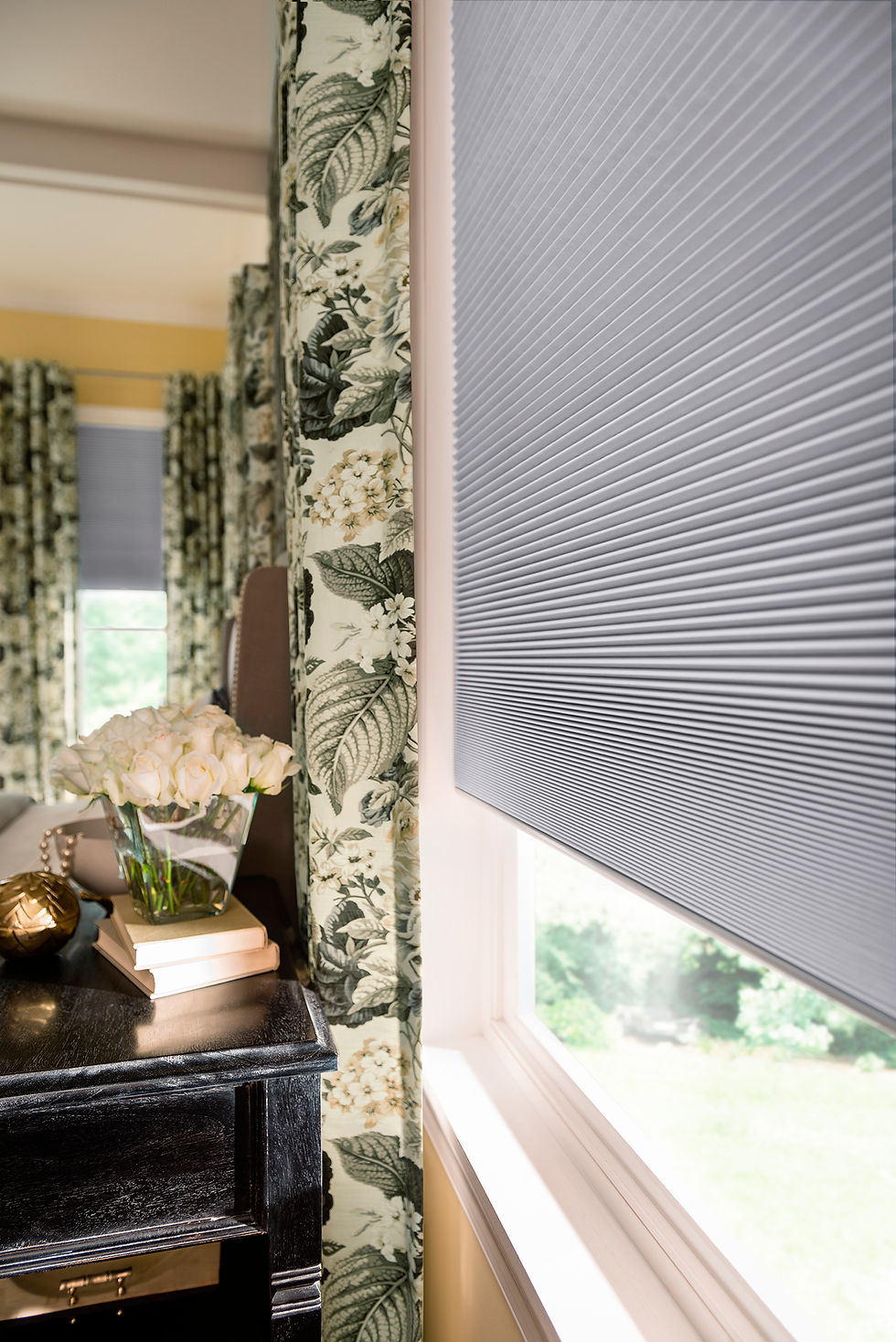
Cellular Shades for Thermal Comfort
Cellular shades feature a distinctive honeycomb construction that creates insulating air pockets.
This design can help reduce heat transfer through windows, making cellular shades worth considering in commercial buildings where indoor comfort and energy performance are important.
Bowling Green experiences hot summers and cooler winter conditions, so window coverings that help manage heat gain and heat loss may provide practical benefits.
Cellular shades are available in light-filtering and room-darkening options.
They can work well in private offices, administrative areas, meeting rooms, and other commercial spaces where a combination of privacy and comfort is desirable.
Their compact, structured appearance also complements many professional interiors.
Horizontal Blinds for Adjustable Light Control
Horizontal blinds remain a practical choice for many commercial applications.
Their adjustable slats allow occupants to redirect sunlight without completely raising or lowering the window covering.
This is especially helpful in individual offices where employees may need to make frequent adjustments throughout the workday.
Blinds can also be selected in coordinated finishes to create a consistent appearance throughout a building.
When planning a new commercial property, consider the slat size, operating requirements, and cleaning needs associated with the selected product.
Sheer Shades for Professional Spaces
Sheer shades combine soft fabric elements with adjustable light-control features.
They can provide a refined appearance while helping diffuse harsh sunlight.
These shades may be appropriate for executive offices, professional reception areas, and client-facing spaces where softer natural light is desirable.
Because different sheer shade styles provide different levels of privacy, the specific product should be evaluated based on the room's intended use.
Layered Shades for Flexible Daylight Management
Layered shades feature alternating sections of sheer and more opaque material.
Adjusting the position of these sections changes the amount of incoming light and outward visibility.
This flexibility can be useful in professional offices, consultation spaces, and meeting rooms.
Layered shades also offer a contemporary appearance that can complement newly constructed commercial interiors.
Planning Window Treatments for Different Commercial Building Types
Selecting commercial window treatments for new construction requires understanding how each building will be used.
A medical office has different privacy requirements from a retail showroom, while an administrative building may need more extensive glare control.
New Office Buildings
New office buildings frequently include private offices, conference rooms, shared workspaces, and reception areas.
Each area can benefit from a different approach.
Solar shades are useful in workspaces with extensive glass exposure.
Horizontal blinds provide adjustable light control in individual offices.
Room-darkening roller shades can help reduce unwanted brightness in presentation spaces.
Cellular shades may be appropriate where privacy and thermal comfort are important.
Medical and Healthcare Facilities
Medical offices, clinics, and healthcare-related commercial properties often require careful consideration of visual privacy.
Waiting rooms may benefit from light-filtering window coverings that create a comfortable environment.
Consultation rooms and private offices may need opaque fabrics or adjustable blinds to limit visibility from outside.
Material selection and cleaning requirements should also be considered.
For specialized healthcare environments, any applicable facility requirements should be confirmed before finalizing window treatment specifications.
Retail and Customer-Facing Businesses
Retail spaces often benefit from natural daylight, but excessive sunlight can create glare and uncomfortable brightness.
Solar shades can help filter sunlight while maintaining some outward visibility.
Roller shades may be useful where stronger privacy or light control is needed.
The best selection depends on the building's window placement and how the interior spaces will be used.
Professional Service Buildings
Accounting firms, insurance agencies, legal offices, and similar businesses often prioritize a coordinated, professional appearance.
Roller shades, cellular shades, horizontal blinds, and plantation shutters may all be suitable depending on the architectural style.
Private meeting areas may require more substantial privacy than public-facing spaces.
Educational and Training Facilities
Training rooms and instructional spaces frequently use computer monitors, presentation displays, and other visual equipment.
Direct sunlight can interfere with screen visibility.
Solar shades and room-darkening roller shades are worth considering in rooms where glare reduction is important.
Adjustable products may be particularly useful when a room serves multiple purposes.
Understanding Window Orientation in New Commercial Construction
One of the most important considerations when selecting commercial window treatments for new construction is the orientation of the building's windows.
Window direction affects both the intensity and timing of sunlight entering a space.
East-Facing Commercial Windows
East-facing windows receive direct sunlight during the morning.
This can create glare for employees beginning their workday, particularly when desks or computer monitors are positioned near the windows.
Solar shades or adjustable blinds can help manage morning brightness.
West-Facing Commercial Windows
West-facing windows can experience strong afternoon sunlight.
During Kentucky's warmer months, this exposure may contribute to uncomfortable brightness and solar heat gain.
Solar shades with appropriate performance characteristics may be especially useful.
Cellular shades can also be considered when thermal comfort is a priority.
South-Facing Commercial Windows
South-facing windows can receive substantial direct sunlight, although the angle and duration vary seasonally.
Businesses may benefit from window coverings that provide adjustable control throughout the year.
North-Facing Commercial Windows
North-facing windows typically receive more indirect daylight.
In these spaces, light-filtering roller shades, sheer shades, or layered shades may provide adequate control without unnecessarily reducing natural light.
The exact requirements depend on surrounding structures, window size, and the building's layout.
Coordinating Window Treatments With Commercial Builders
Planning commercial window treatments for new construction can be more effective when window covering requirements are discussed alongside other building decisions.
Commercial builders and property owners should consider the dimensions, placement, and intended use of each window before selecting products.
Reviewing Architectural Window Details
Architectural drawings can provide useful information about window dimensions and locations.
However, final measurements should be confirmed at the appropriate stage of construction.
Finished window openings may differ from preliminary plans, particularly after surrounding materials and trim have been installed.
Accurate measurements are essential for achieving the intended fit.
Identifying Mounting Conditions
Some window treatments can be mounted inside the window opening, while others may require an outside mount.
The available mounting depth, surrounding surfaces, and hardware requirements influence which options are practical.
Discussing these details early can help prevent unexpected limitations.
Considering Large Window Openings
Commercial properties may feature oversized windows or continuous glass walls.
These openings can require careful product selection.
Factors such as shade width, fabric characteristics, hardware capacity, and operation should be reviewed.
Not every shade style is suitable for every window dimension.
Planning for Convenient Operation
Window treatments should be easy for the intended occupants to use.
A shade in a private office may be operated several times daily, while a covering in a reception area may remain in one position for much of the day.
The expected operating frequency and accessibility of the window should influence the product choice.
Interior vs. Exterior Window Treatments for New Buildings
Businesses exploring commercial window treatments for new construction should consider whether interior shades, exterior shades, or a combination of the two would best address their needs.
Interior Window Treatments
Interior blinds and shades are installed on the inside of the building.
They provide a variety of options for privacy, daylight control, and appearance.
Roller shades, solar shades, cellular shades, horizontal blinds, and other interior products can be selected for individual rooms.
They are especially useful when different spaces require different levels of light control.
Exterior Window Treatments
Exterior shades are positioned outside the window.
Depending on their design, they can intercept solar radiation before it passes through the glass.
This may help reduce solar heat gain and glare.
Exterior shades require consideration of weather exposure, mounting conditions, product specifications, and operation.
Not every exterior shade is appropriate for every commercial building.
When Combining Interior and Exterior Shades Makes Sense
Some commercial buildings may benefit from different shading strategies on different elevations.
For example, exterior shades might be considered for a highly exposed section of the building, while interior roller shades provide privacy and light control in individual rooms.
The appropriate combination depends on the building's architecture, orientation, and operational requirements.
Selecting Window Treatments for Large Commercial Windows
Large windows are common in contemporary commercial construction.
They can provide expansive views and generous natural light, but they also create unique window covering challenges.
When choosing commercial window treatments for new construction, oversized windows deserve special attention.
Fabric Selection Matters
Large shade surfaces make fabric characteristics especially noticeable.
Color, texture, opacity, and openness can all influence the finished appearance.
Fabric samples should be evaluated in lighting conditions similar to those expected in the completed building.
Shade Dimensions Affect Product Choices
Manufacturers establish maximum dimensions for different shade systems.
These limitations depend on the fabric, hardware, and product design.
For especially wide openings, dividing the area into multiple shade sections may be necessary or desirable.
Light Gaps Should Be Considered
Roller shades and other mounted window coverings may allow light around the edges.
The amount depends on the product and installation method.
Businesses seeking strong room darkening should discuss these details before selecting a shade.

Consistency Across Multiple Windows
When a commercial building has a continuous row of windows, matching fabrics and finishes can help create a unified appearance.
However, individual shade sections may provide greater flexibility than one large covering.
This can be useful in shared workspaces where different employees have different lighting preferences.
Energy Efficiency and Commercial Window Coverings
Energy performance is an important consideration in new commercial construction.
While the windows themselves are a major factor, appropriately selected window coverings can also influence indoor comfort.
Reducing Solar Heat Gain
Direct sunlight entering through glass can increase indoor temperatures.
Solar shades help filter sunlight and can reduce solar heat gain depending on their specifications.
Exterior shades may provide additional benefits in certain applications because they intercept sunlight before it reaches the glass.
Improving Insulation at the Window
Cellular shades can reduce heat transfer through windows because of their insulating air-pocket construction.
Their effectiveness depends on the selected product, installation, and window conditions.
Balancing Daylight and Thermal Performance
Blocking all natural light is not necessarily desirable.
Commercial buildings often benefit from daylight, but excessive direct sunlight can create discomfort.
The goal is to select window coverings that provide appropriate solar control while maintaining useful natural illumination.
Evaluating Performance Claims
Different fabrics and products offer different performance characteristics.
When energy efficiency is a major project objective, business owners should review available product specifications rather than assuming all shades provide the same benefit.
Window coverings can complement a building's energy strategy, but their impact varies by application.
Privacy Requirements for Newly Constructed Commercial Spaces
Privacy is another important consideration when planning commercial window treatments for new construction.
The necessary level of coverage depends on the activities taking place inside each room.
Private Offices
Private offices may require window coverings that limit visibility from outside.
Opaque roller shades, appropriate cellular shades, and adjustable blinds can all provide useful options.
Conference Rooms
Meeting rooms may require both privacy and glare reduction.
Room-darkening roller shades or cellular shades can be appropriate when presentations are common.
Reception and Waiting Areas
Reception spaces often benefit from natural light, but street-facing windows may require additional privacy.
Light-filtering fabrics can soften incoming sunlight, although the degree of privacy varies by product.
After-Hours Privacy
Businesses operating after dark should pay particular attention to fabric selection.
Open-weave solar shades may allow people outside to see into a brightly lit interior.
More opaque coverings may be appropriate where nighttime privacy is essential.
Are Plantation Shutters and Roman Shades Suitable for New Commercial Buildings?
Although roller shades and blinds are popular choices, other products can work well in selected commercial spaces.
Plantation Shutters
Plantation shutters provide a structured appearance and adjustable louvers.
They can be attractive in executive offices, professional service buildings, and commercial interiors with traditional architectural details.
Their installation requirements should be evaluated early because window depth, frame conditions, and clearance can influence suitability.
Roman Shades
Roman shades offer a softer fabric appearance.
They may be suitable for private consultation rooms, executive offices, and other professional spaces where a more tailored visual style is desired.
Fabric opacity and operating requirements should be considered carefully.
Natural Shades
Natural shades provide a textured appearance through woven materials.
They can work well in selected commercial environments, although privacy and light control vary significantly by material.
For spaces requiring stronger privacy, a suitable liner may be worth discussing where available.
Sheer and Layered Shades
Sheer and layered shades offer additional options for businesses seeking adjustable light control with a refined appearance.
These products may be especially appropriate in client-facing areas and professional offices.
Common Mistakes to Avoid When Selecting Commercial Window Treatments
Even thoughtfully designed commercial buildings can encounter window covering problems when product selection happens too late or important requirements are overlooked.
Waiting Until the Building Is Occupied
Delaying window treatment decisions can leave employees dealing with excessive glare or inadequate privacy.
Early planning allows the building's window covering requirements to be addressed before regular operations begin.
Selecting Products Based Only on Appearance
A shade may look attractive but fail to provide adequate sunlight control.
Businesses should evaluate how the product performs in the intended room.
Overlooking Nighttime Visibility
Solar shades that preserve views during the day may not provide adequate privacy after dark.
This is especially important for buildings with evening operating hours.
Assuming Every Room Needs the Same Fabric
Different rooms have different lighting and privacy requirements.
Using coordinated styles with different fabric opacities can provide a better balance between consistency and performance.
Ignoring Window Size Limitations
Not every shade system is appropriate for every opening.
Oversized commercial windows may require specific hardware or multiple shade sections.
Failing to Confirm Final Measurements
Construction drawings are useful for preliminary planning, but final window measurements should be verified before ordering custom products.
This helps ensure that the selected coverings fit the completed openings.
Commercial Window Treatment Planning in Bowling Green, Kentucky
For businesses planning commercial window treatments for new construction in Bowling Green, local conditions should be part of the decision-making process.
The greater Bowling Green area includes a variety of commercial properties, from professional office buildings and medical facilities to retail spaces and business developments.
Properties near Scottsville Road, Nashville Road, downtown Bowling Green, and surrounding commercial corridors may have different architectural styles and window configurations.
Buildings in nearby communities such as Alvaton, Plano, and other parts of the greater Bowling Green area can also have unique requirements based on their location and design.
Accounting for Kentucky's Seasonal Conditions
Bowling Green experiences warm summers, cooler winters, and changing sunlight conditions throughout the year.
Window treatments that help manage glare and solar heat gain can be particularly useful in offices with significant glass exposure.
Cellular shades may be worth considering in spaces where additional window insulation is desirable.
Considering the Building's Surroundings
Nearby buildings, trees, and other structures can influence how sunlight reaches commercial windows.
A west-facing window with unobstructed exposure may require different shading than one partially protected by a neighboring building.
These site-specific conditions should be evaluated when selecting products.
Planning for Long-Term Commercial Use
Window coverings in commercial spaces should be selected with everyday operation in mind.
Durability, ease of adjustment, cleaning requirements, and the ability to accommodate different occupants all deserve consideration.
A Practical Window Treatment Checklist for Commercial Builders
Before finalizing commercial window treatments for new construction, builders and property owners should review several important details.
1. Identify the Purpose of Every Room
Determine whether each area will function as an office, conference room, reception area, waiting room, or other commercial space.
The room's intended use will influence its privacy and light-control requirements.
2. Evaluate Window Orientation
Identify which windows receive strong morning or afternoon sunlight.
This helps determine where solar shades or other glare-control products may be beneficial.
3. Establish Privacy Requirements
Consider whether each room needs daytime privacy, nighttime privacy, or both.
Choose fabrics and products accordingly.
4. Review Window Dimensions
Identify unusually large or narrow openings and discuss which products are suitable.
Confirm final measurements before ordering.
5. Determine Mounting Preferences
Consider whether inside-mounted or outside-mounted coverings are appropriate.
Available mounting space and hardware requirements may influence the decision.
6. Select Coordinated Styles and Finishes
Choose window coverings that complement the building's intended professional appearance.
Where practical, use coordinated finishes throughout the property.
7. Consider Daily Operation
Think about who will operate the window coverings and how frequently adjustments will be needed.
8. Discuss the Project With a Window Treatment Specialist
A professional consultation can help clarify product options, measurements, installation considerations, and the choices best suited to the property.
Frequently Asked Questions About Commercial Window Treatments for New Construction
When Should Window Treatments Be Selected During Commercial Construction?
Window treatments should ideally be considered during the design or construction planning stage.
Early planning helps identify mounting requirements, window size limitations, privacy needs, and suitable product options.
Final measurements should be confirmed when the window openings are ready.
What Window Treatments Are Best for a New Office Building?
Solar shades, roller shades, cellular shades, and horizontal blinds are all worth considering.
The ideal selection depends on the room's purpose, sunlight exposure, privacy requirements, and architectural style.
Are Solar Shades Suitable for Commercial Buildings With Large Windows?
Yes, solar shades are frequently a practical option for large commercial windows.
They help reduce glare and filter sunlight while maintaining varying levels of outward visibility.
Product dimensions and fabric specifications should be reviewed for oversized openings.
Can Window Treatments Help Improve Energy Efficiency?
Certain window treatments can help manage solar heat gain or reduce heat transfer through windows.
Solar shades, exterior shades, and cellular shades are particularly worth evaluating.
The actual benefit depends on the product and building conditions.
Should Commercial Builders Use the Same Window Treatments Throughout a Building?
Using coordinated products can create a consistent appearance, but different rooms may require different fabric opacities or light-control features.
For example, light-filtering roller shades may be appropriate in reception areas, while room-darkening shades may work better in presentation rooms.
Are Exterior Shades a Good Option for New Commercial Construction?
Exterior shades can be useful for certain commercial buildings, particularly where significant solar exposure is a concern.
Their suitability depends on mounting conditions, weather exposure, and the selected product.
Where Can I Find Commercial Window Treatments in Bowling Green, KY?
Guyer Shade Pros serves the greater Bowling Green area and offers a range of window treatment options for commercial spaces.
Business owners, builders, and property developers can contact the team to discuss available products and request a customized quote.
Work With Guyer Shade Pros on Your New Commercial Window Treatment Project
Selecting commercial window treatments for new construction is an important part of creating a comfortable, practical, and professional commercial environment.
The right blinds, shades, or shutters can help manage sunlight, reduce glare, provide privacy, and support a coordinated appearance throughout the building.
Whether you're planning a new office, professional service building, medical facility, retail property, or another commercial space in the greater Bowling Green area, Guyer Shade Pros can help you explore window covering options suited to your needs.
Our product selection includes roller shades, solar shades, cellular shades, horizontal blinds, Roman shades, plantation shutters, natural shades, sheer shades, layered shades, and exterior shades.
From evaluating sunlight exposure to selecting appropriate fabrics and finishes, careful planning helps ensure that window coverings complement the completed property.
Schedule a complimentary consultation with Guyer Shade Pros to discuss your new construction project and receive a customized quote. Complimentary in-home consultations are also available for residential projects; commercial customers can discuss the appropriate consultation arrangements for their property.
Call (270) 535-6356 or book a consultation through our website.
Let Guyer Shade Pros help you select window treatments that support the long-term functionality, comfort, and professional appearance of your new Bowling Green commercial building.


Comments